
Alamance County Criminal History Checks
Start with the record that answers the question at hand. The North Carolina eCourts Portal is the quickest free lead for an Alamance County case. The sheriff's current inmate list is better for a person who may be in local custody now. A police or sheriff report must come from the agency that made it. The North Carolina State Bureau of Investigation, or NCSBI, provides a fingerprint-based review only to the person whose record it is.
Names alone can produce the wrong match. Gather a full legal name, other names used, an approximate event date, and the city or agency involved. Date of birth can help the clerk distinguish people, but sensitive identity data should go only through an official form or counter. Follow a public lead back to its custodian before relying on a charge or outcome.
- Search eCourts by party name or case number and narrow the location to Alamance County.
- Check the sheriff's inmate list when the event is recent and present custody is the key issue.
- Ask the arresting agency for its report, using the date, place, and incident number when known.
- Confirm the judicial result at the clerk's counter or a courthouse public terminal.
- Request a certified Alamance County name search when a certified county result is needed.
- Use NCSBI Right to Review for your own fingerprint-linked statewide North Carolina history.
Alamance eCourts Criminal Case Search
Alamance County joined Odyssey and eCourts in April 2024. In Portal, Smart Search accepts a party or business name and a case number. Advanced filters can narrow the location, case category, status, and filing dates. A wildcard may help with spelling, while an Alamance location filter reduces same-name noise from the rest of North Carolina. Public results can show case status, hearings, charges, events, dispositions, and financial entries when those fields apply.
Portal is not the official record. It omits restricted data, and not every filed document can be downloaded. Unreturned warrants, juvenile cases, protected orders, sealed matters, and confidential items may be hidden. Converted legacy events can also show a midnight time because a date migrated without its old time. For a hard identity match or certified result, take the case number to the Alamance clerk.
| Portal control | Best use | Search note |
|---|---|---|
| Smart Search | Name or case number | Use spelling variants with care |
| Location | Alamance County cases | Limits statewide same-name results |
| Case category | Criminal or infraction files | Values vary by module |
| Filed dates | A known time range | Useful for common names |
Official Background Checks in North Carolina
North Carolina does not offer a general public NCSBI name-search portal. A person may request their own statewide, fingerprint-linked record through Right to Review. The file covers North Carolina arrests and related dispositions received by NCSBI. It does not promise every court filing, and it does not include an out-of-state or complete federal history. A fingerprint-supported arrest can appear even when a local case needs a separate clerk search.
For an Alamance-only certified name check, the Clerk of Superior Court uses form AOC-CR-314 and charges $25. Courthouse terminals allow noncertified searches without a search fee, though printing can cost extra. The clerk route searches court records. Right to Review searches the state repository by fingerprints. The FBI Identity History Summary is a separate subject-only national product with its own fingerprint process and federal fee. These products answer different questions and should not be treated as substitutes.
Note: Lead with self-review and the proper official channel whenever a fingerprint-based result is required by law.
Alamance SBI Criminal Record Review
The NCSBI criminal-history repository overview explains why fingerprints, arrest data, and reported court outcomes form a distinct state file.
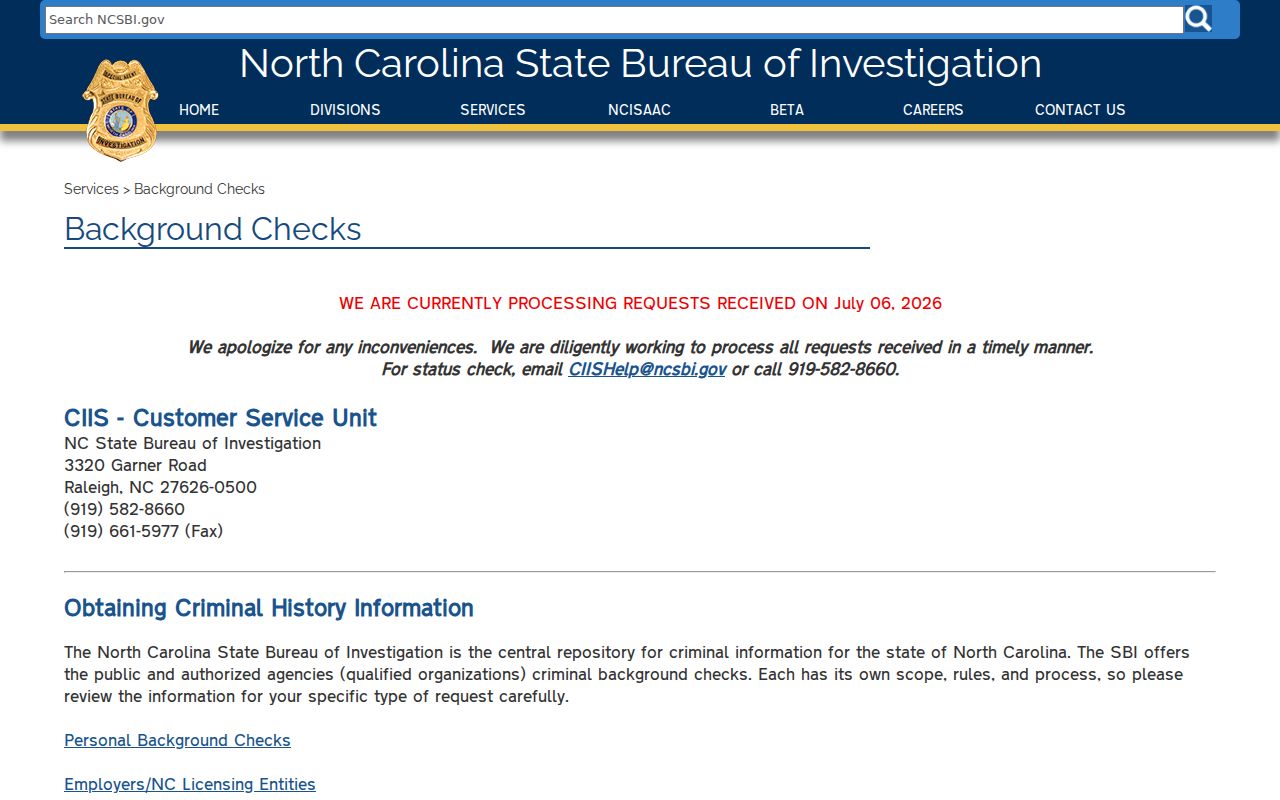
The repository image reinforces a key limit: public court dockets and a personal fingerprint review are not the same record product. Right to Review requires a completed request, an unfolded FD-258 card with ten legible prints, and payment by certified check or money order. The $14 result returns by mail, and NCSBI says processing may take up to 20 business days. Alamance County Sheriff's Office offers local fingerprinting at its Graham office, but callers should confirm the current schedule, identification rules, and card needs before travel.
| Official product | Current fee | Scope |
|---|---|---|
| NCSBI Right to Review | $14 | Your fingerprint-linked North Carolina file |
| Certified Alamance court search | $25 | Name-based Alamance County court records |
| Courthouse terminal | No search fee | Noncertified public court view; print fees may apply |
| FBI Identity History Summary | $18 federal fee | Your national fingerprint history |
If a Right to Review result is wrong, use the NCSBI written exception process. A missing disposition may require a source document from the arresting agency or Alamance clerk.
Kinds of Criminal Records
One event creates several Alamance County records. The arresting agency owns its incident or arrest report. Alamance Detention creates the booking and custody entry. The clerk opens the state court case and tracks hearings, filings, charge changes, judgment, and sentence. NCSBI may add a fingerprint-supported cycle to the statewide repository. NCDAC maintains prison and community-supervision information after sentencing, while the sheriff collects and verifies county sex-offender registration data for the state registry.
The custodian matters more than where a person was housed. A Burlington Police report stays with Burlington Police even when booking occurs at the Alamance detention complex. Mebane and Graham keep their own police files. The sheriff does not become the owner of every city report merely because the jail accepted the person.
North Carolina classifies felonies from A through I and misdemeanors as A1, 1, 2, or 3. A class shown beside a charge is not the outcome or sentence. Structured Sentencing also considers prior-record level and the permitted range, so the signed judgment and current statute are the sound sources for what the court imposed.
- Agency report: basic incident and arrest facts, with investigative material subject to limits.
- Booking record: intake, current custody, charge, bond, agency, and release movement data.
- Court case: filed process, events, hearings, disposition, judgment, and financial entries.
- Repository file: fingerprint-linked North Carolina arrest cycles and reported outcomes.
- Custody or registry file: prison, supervision, or sex-offender information kept by the named state and county agencies.
Three Alamance Arrest Records Compared
A jail entry proves intake and custody, not guilt. A court file shows what the prosecutor and court did with the case. An NCSBI file shows the fingerprint-linked events and dispositions that reached the central repository. Those three products can disagree for a time because they are created by different offices at different steps. Charges may be amended or dismissed. A grand jury may indict on another count. A disposition can also reach the state repository after the court docket changes.
The practical flow is short: Arresting agency report → Alamance booking → magistrate decision → District or Superior Court case → disposition reported to NCSBI. When an old arrest remains after a dismissal or expunction, compare the clerk's certified record with your Right to Review result. The office with the error needs the source proof. A booking screen alone cannot resolve the final outcome.
- Disposition
- The outcome of a charge, such as conviction, dismissal, or acquittal.
- Indictment
- A grand jury's formal felony charge, which may differ from the arrest allegation.
- Recognizance
- Release based on a written promise to meet court conditions.
- Expunction
- A statutory order that removes eligible records from ordinary public systems.
Alamance County Criminal Records: What They Contain
Fields change with the product. A state rap sheet begins with identifiers and fingerprint association, then lists arrest cycles, agencies, charges, tracking data, reported dispositions, and sentence details. The eCourts case view emphasizes the case number, parties, attorneys, charge class, filed events, hearing place, outcome, judgment, and balance. The inmate list focuses on a name, primary charge, arrest date, and booking agency. Public views remove or hide data protected by law.
| Name and identifiers | Names, aliases, birth data, and identity keys appropriate to the official record. |
|---|---|
| Arrest and booking | Date, agency, intake event, initial charge, bond, and custody movement where public. |
| Court charge | Filed offense, class, citation or process, and later amendments. |
| Case events | Hearings, filings, judicial officer, plea, trial, and register of actions. |
| Disposition | The final result recorded for each charge, when available. |
| Sentence or supervision | Judgment, financial terms, custody, probation, parole, or post-release data. |
Alamance Criminal Record Counters
The Judge J.B. Allen Jr. Criminal Courthouse at 212 W. Elm Street in Graham is the criminal-record counter. District Court handles misdemeanors, infractions, first appearances, and preliminary felony matters. Superior Court tries felonies. The clerk's main number is 336-570-5200, and the courthouse is open from 8:00 a.m. to 5:00 p.m. on weekdays. The Historical Courthouse at Court Square handles civil business, so it is the wrong stop for a criminal file.
The Alamance County Sheriff's Office and Detention Center at 109 S. Maple Street holds sheriff reports, detention records, fingerprint service, and county registry administration. Its front office number is 336-228-1312; detention can be reached at 336-570-6317. The split between the modern criminal courthouse and sheriff complex mirrors the records split. Ask the clerk for the judicial file and the sheriff for a sheriff-created or custody record.
Criminal Courthouse
212 W. Elm Street
Graham, NC 27253
336-570-5200
Weekdays, 8:00 a.m.-5:00 p.m.
Sheriff and Detention
109 S. Maple Street
Graham, NC 27253
336-228-1312
Front office weekdays, 8:00 a.m.-5:00 p.m.
North Carolina Public Access Laws
North Carolina Public Records Law starts with broad access to records made or received in public business. Criminal files have added rules. Basic listed arrest and incident facts can be public, while investigative narratives, confidential sources, juvenile information, victim-sensitive details, medical data, and facts that could harm an active investigation may be withheld or redacted. Court records are open for inspection unless another law closes them. A body-camera recording follows a separate court-controlled process.
The official Chapter 132 text shows the state public-record framework used for Alamance County requests.
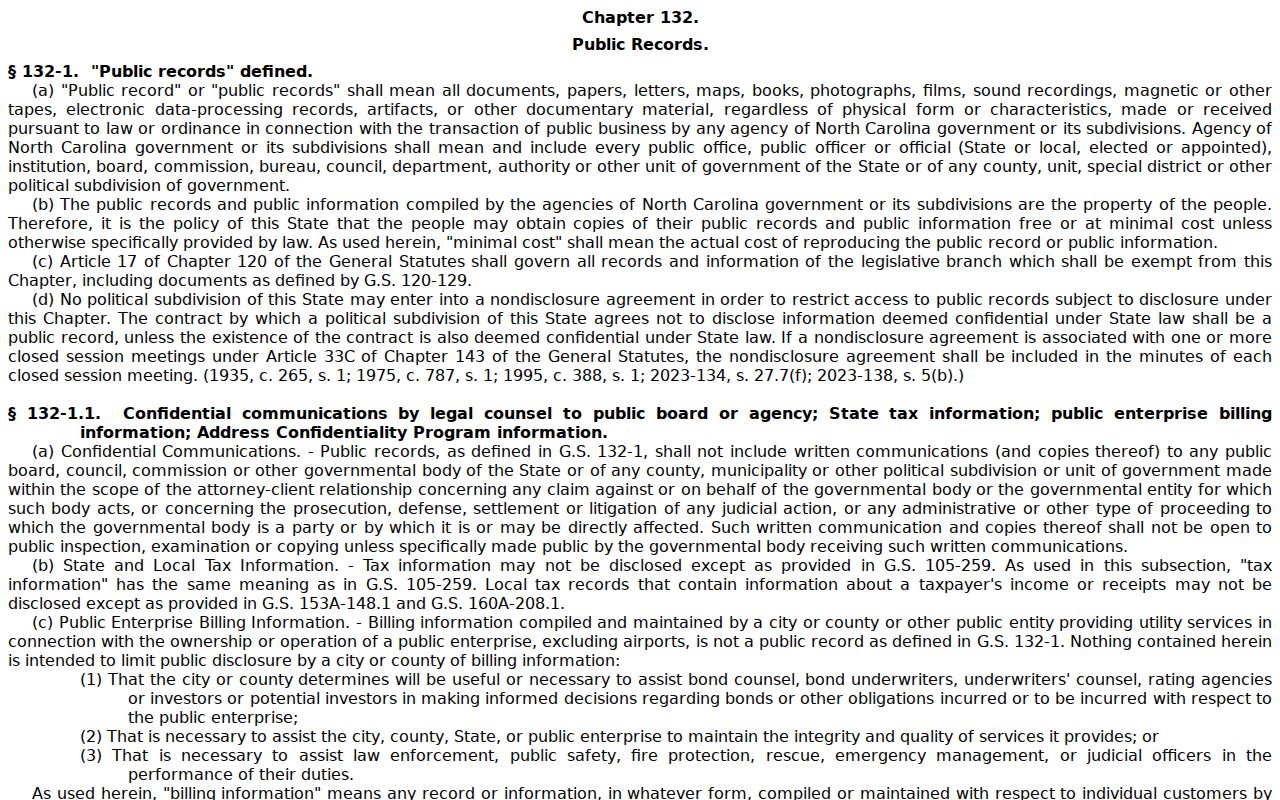
The law image is a reminder to identify the correct record and custodian before making a broad request. A narrow request with an incident date, place, agency number, and preferred format is easier to locate and review.
Key laws:
G.S. 132-1 broadly defines public government records.
G.S. 132-1.4 separates public basic facts from protected investigative material.
G.S. 7A-109 opens clerk records unless the law closes them.
G.S. 15A-502 and 503 govern fingerprinting and law-enforcement record dissemination.
Article 5A contains North Carolina's outcome-specific expunction routes.
Alamance Warrant Record Fallbacks
Alamance County does not publish a verified public active-warrant name search. North Carolina eWarrants serves courts and law enforcement, not public users, and public eCourts restricts an unreturned criminal warrant. Once process is returned and a case moves, public case events may appear. A no-result search therefore cannot prove that no warrant exists.
For public filed process and current case status, call the Alamance clerk at 336-570-5200 or the courthouse at 336-570-5202. Magistrates handle after-hours judicial matters at 336-570-5219. The sheriff's nonemergency number is 336-570-6300. Crime Stoppers is a tip line, not a warrant-verification service. Anyone who thinks they may have a warrant should get case-specific legal advice before appearing rather than depend on a public search.
A local post-Odyssey rule also matters. Probation officers no longer use the old “Probation Authority to Arrest” paper in Alamance criminal courts. An Order for Arrest comes through the clerk during business hours or a magistrate after hours. A separate limited policy can strike a first failure-to-appear status in qualifying pending District Court matters, but only the filed order and clerk's current record control.
Restricted, Sealed & Expunged Records
North Carolina uses “expunction” as its statutory term. There is no one rule for every case. Dismissals and not-guilty outcomes can fall under G.S. 15A-146, including some automated processes. Other sections address certain youthful misdemeanors and eligible nonviolent convictions. Prior cases, pending charges, offense type, and waiting periods can change eligibility. Use the North Carolina Judicial Branch expunction forms for the right statutory route.
Petitions generally go to the Alamance clerk in the county of conviction. The clerk may route notices and required record checks, the district attorney may respond, and a judge can hold a hearing. An entered order is then sent to listed agencies. Public Portal removal can lag. If the event remains in an NCSBI result, use Right to Review and its exception process. If it remains in court data, bring the certified order to the clerk.
Juvenile files, unreturned warrants, protected orders, victim identities, medical facts, and account numbers have their own confidentiality rules. Their absence from a public screen does not mean a court entered an expunction order.
Alamance Custody Record Locators
Use the Alamance P2C inmate list for current county custody and recent booking leads. Use NCDAC Offender Search for state prison, probation, parole, and post-release information. Use VINELink or NC SAVAN to enroll in custody notifications. Each tool has a narrow job. The jail list is not a permanent arrest index, and a state offender result is not the Alamance court judgment.
The NCDAC offender-search choices identify the official state locator routes beyond the county jail.
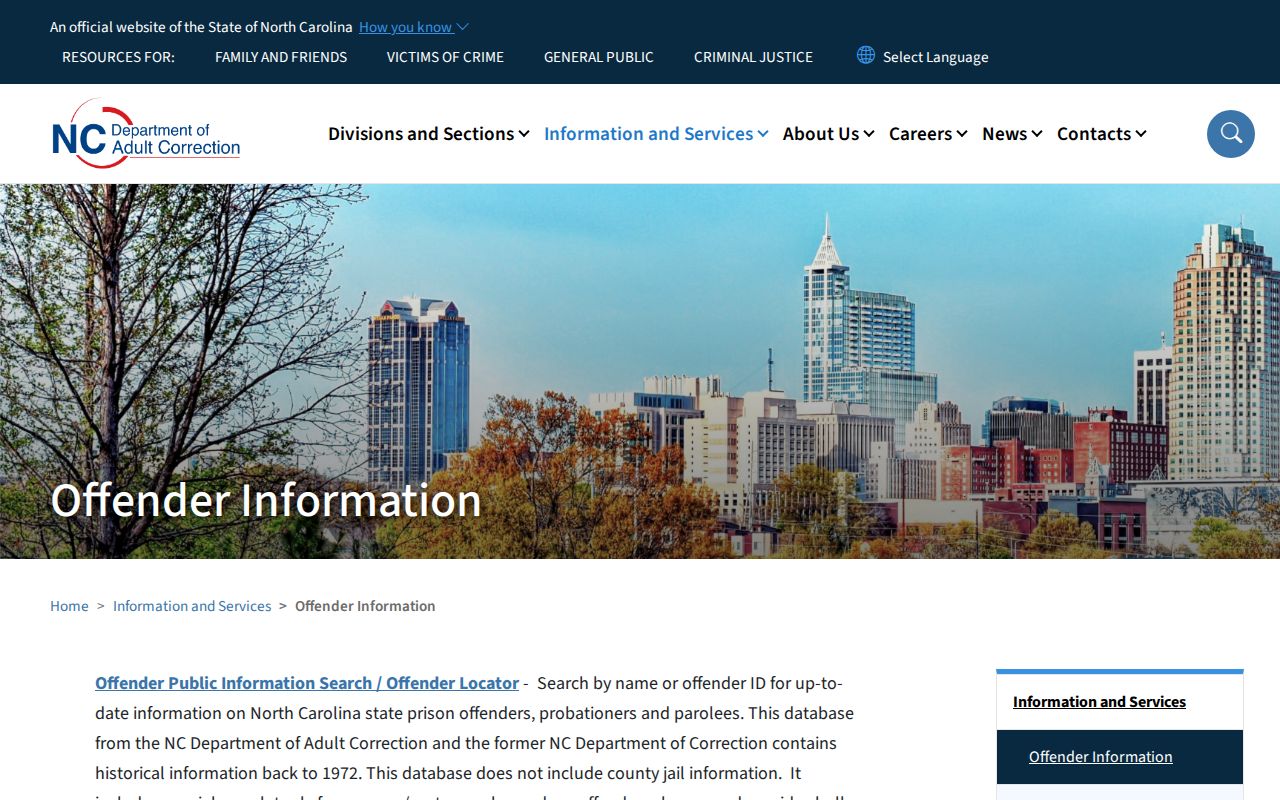
This state search image helps separate a sentence or supervision record from a short-term Alamance booking. The court file remains the source for the judgment and violation events.
For changes after release, the North Carolina VINELink service provides an official notification layer.
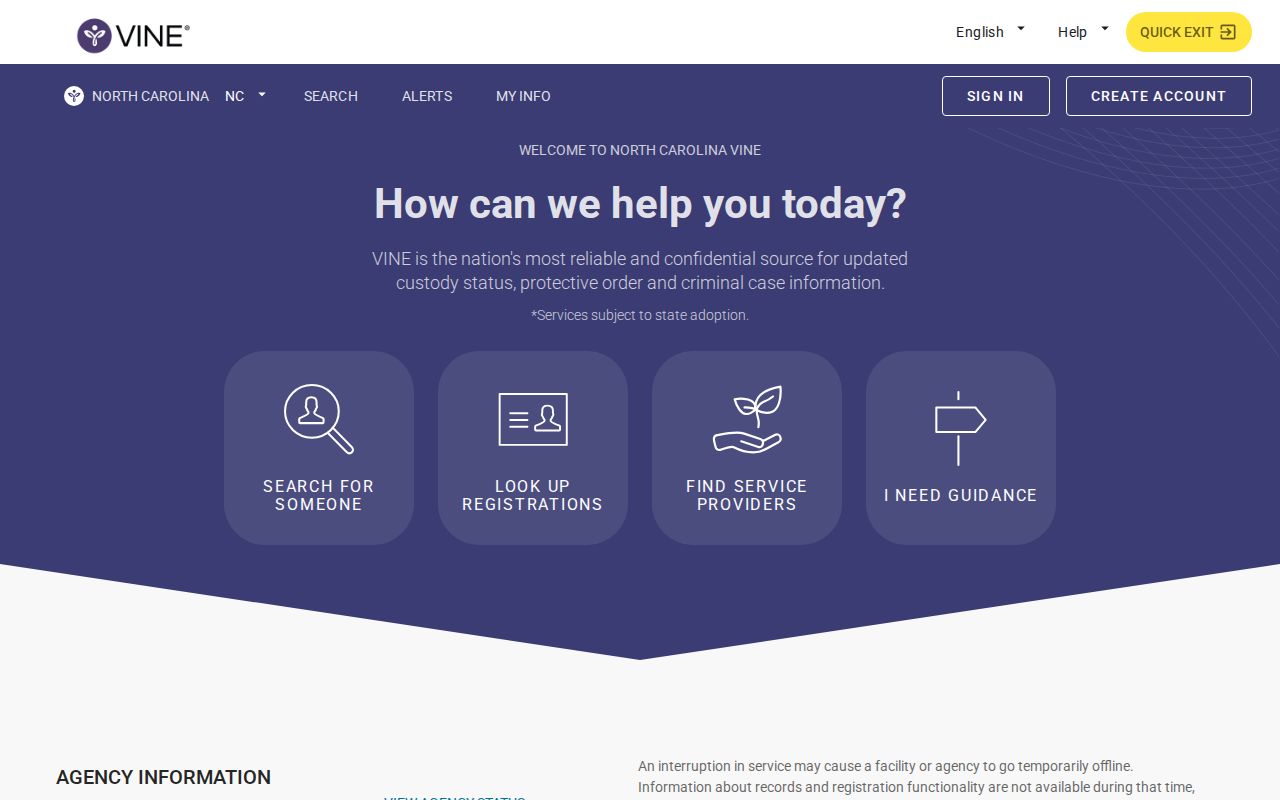
The notification image shows why an alert subscription and a one-time search are different tasks. Call Alamance Detention when a name match is unclear or a release is too recent for the screen.
| Need | Official channel | Main limit |
|---|---|---|
| Current local custody | Alamance P2C inmate list | Not permanent arrest history |
| State prison or supervision | NCDAC Offender Search | Not the clerk's case file |
| Status notification | VINELink or NC SAVAN | Not a disposition check |
City-by-City Criminal Records in Alamance County
Burlington, Mebane, and Graham are the three largest incorporated cities in the county by the Census Bureau's 2025 estimates. Each police department keeps the reports it creates, while Alamance-side prosecutions enter North Carolina's unified court system at the J.B. Allen Jr. Criminal Courthouse. North Carolina has no municipal-court tier. Burlington extends into Guilford County and Mebane extends into Orange County, so the incident location can change the correct jail and clerk.
Burlington Record Check
61,496 residents · Police records begin with Burlington's Records Section.
Mebane Record Check
21,952 residents · Verify whether the event was in Alamance or Orange County.
Graham Record Check
20,131 residents · Graham Police and the state criminal courthouse are separate custodians.
Alamance Criminal Justice Offices
The Alamance County Sheriff's Office service page routes readers to detention, fingerprinting, public records, and other sheriff functions.
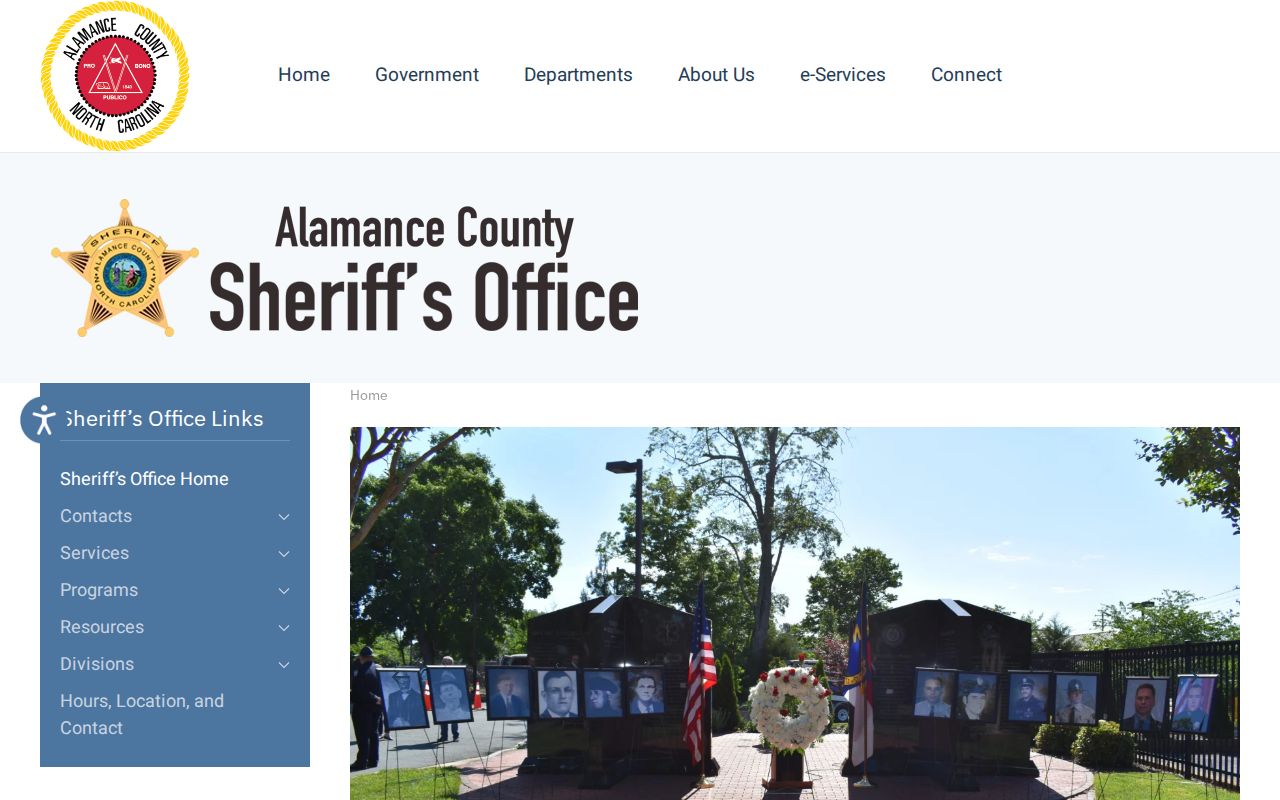
The sheriff image connects the county's report, jail, registry, and fingerprint channels without confusing them with the clerk's court file. A written sheriff request works best when it names the record, incident date, location, agency number, and preferred delivery format.
The Alamance Public Defender listing identifies the appointed-defense office for eligible people in local cases.
The public defender image marks another office boundary. The public defender represents eligible appointed clients, but it does not issue public criminal-history reports. Prosecutorial District 17 handles state charges, and the clerk remains the source for an official disposition copy.
Alamance County's courthouse system is still changing. A public eCourts kiosk added search, scanning, printing, filing, and payment access in 2025. County capital plans also projected work on the court complex through 2026. Visitors should confirm the correct entrance and counter while that plan is active.